
Italy Apostille Translation Requirements
- Mar 13
- 7 min read
Updated: Jul 17
If your documents will be used in Italy, obtaining the apostille is only one part of the process. In many cases, Italy also requires professionally prepared Italian translations before the documents will be legally recognized by a Comune, consulate, university, court, or government office.
This is where many international document submissions run into problems.
Italy is a civil law country with strict administrative procedures. Unlike some countries, Italian authorities generally do not recognize a basic self-certified translation or a standard American notary public stamp placed on a translation package.
Understanding Italy apostille translation requirements before submitting documents internationally can help prevent delays, rejected filings, and expensive translation corrections later in the process.
Depending on exactly where the final paperwork is being submitted, the process usually follows one of three distinct legal translation paths.
1. Traduzione Giurata (Sworn Translation in Italy)
If the documents are being submitted directly inside Italy — such as to a local Comune for residency, marriage registration, inheritance matters, or court proceedings — the translation often needs to become an official traduzione giurata.
This is commonly required for:
Italian dual citizenship
Residency applications
Court filings
Civil registration
Certain legal proceedings
How the Process Works
A professional translator takes:
The original document
The apostille
The Italian translation
to an Italian court (Tribunale) or authorized judicial office.
The translator then formally swears an oath before a court official declaring that the translation faithfully matches the original document.
The court attaches:
Official seals
Judicial certifications
Revenue stamps (marche da bollo)
Once completed, the translation becomes an officially asseverated Italian legal translation.
2. Consular Legalization / Traduzione Conforme
If the documents are being submitted to an Italian Consulate within the United States, the process may follow an entirely different set of rules.
This is especially common for:
Jure Sanguinis dual citizenship applications
Vital records submissions
Consular registration
Family record updates
Each Italian consulate operates under its own administrative procedures and jurisdiction requirements.
Approved Translators & Consular Certification
Many Italian consulates maintain their own lists of:
Approved translators
Registered translators
Translation formatting requirements
In these cases, applicants often submit:
The English-language document
The state-issued apostille
The completed Italian translation
The consulate then reviews the translation for compliance.
If accepted, the consular office may issue a:
Certificato di Conformità della Traduzione
(Certificate of Translation Conformity)
This official certification confirms the translation complies with the consulate’s requirements and may then be used in Italy.
Because consular rules can vary significantly between jurisdictions, it is extremely important to verify the exact checklist directly with the specific Italian consulate handling the application.
3. The Double Apostille Method
In some administrative situations, Italian authorities may accept a translation completed in the United States if the translation itself also undergoes its own legalization process.
This is commonly referred to as the “double apostille” method.
How the Double Apostille Workflow Works
The process generally follows these steps:
The original document receives its apostille
The document is professionally translated by a translator experienced with Italian administrative and consular requirements
The translator signs a certification statement before a Remote Online Notary (RON) commissioned in the United States
The notarized translator certification is then submitted for a second apostille in the same U.S. state where the Remote Online Notary is commissioned
This second apostille authenticates the notary public who witnessed the translator’s signature during the remote online notarization session.
In this workflow, the translation itself becomes part of the authenticated document chain, allowing both the original apostilled document and the sworn translator certification to carry their own verifiable legalization path for use in Italy.

The Golden Rule of Italian Apostille Translation
One of the most important rules in Italian document preparation is:
Never translate the document before the original apostille has been completed.
In Italian administrative practice, the apostille itself is considered part of the authenticated legal document.
Because of this, the apostille certificate — including its seals, signatures, and authentication wording — often must also be translated into Italian alongside the underlying document.
If the apostille is added after the translation has already been completed, the finalized authenticated document package may no longer match the translated version being submitted to the receiving authority.
This can lead to:
Rejections
Processing delays
Requests for updated translations
Additional legalization expenses
For this reason, the apostille should generally be completed before the translation workflow begins.
Italian Comune Requirements Can Vary
One of the most challenging aspects of Italian document preparation is that individual Comuni and Italian consular offices often maintain a high degree of administrative autonomy.
This means document acceptance standards may vary significantly depending on the receiving jurisdiction.
For example:
One Comune may accept a certified translation package
Another may require a traduzione giurata
Another may require consular certification procedures
Another may request authenticated translator affidavits tied to a separate apostille chain
Requirements can differ based on:
The region within Italy
The individual Comune
The consular jurisdiction
The purpose of the documents
The administrative office reviewing the file
Because of these variations, obtaining the exact checklist directly from the receiving Italian authority is often the safest way to avoid delays before shipping original documents internationally.
Italy & the Hague Apostille Convention
Italy is a member of the Hague Apostille Convention.
This means properly apostilled California documents are generally recognized in Italy without embassy legalization requirements.
However, translation requirements remain separate from apostille authentication requirements.
You can review the official Hague Apostille Convention information here:
Common Italy Apostille Translation Mistakes
Italian document requirements can be strict, especially when apostilled documents and translations are being reviewed by a Comune, consulate, court, or other administrative office. The most common problems usually come from the physical document bundle, the order of translation, or assuming every Italian authority follows the same rules.
1. Removing the Apostille Staple
Italian authorities take the physical integrity of an apostilled document seriously.
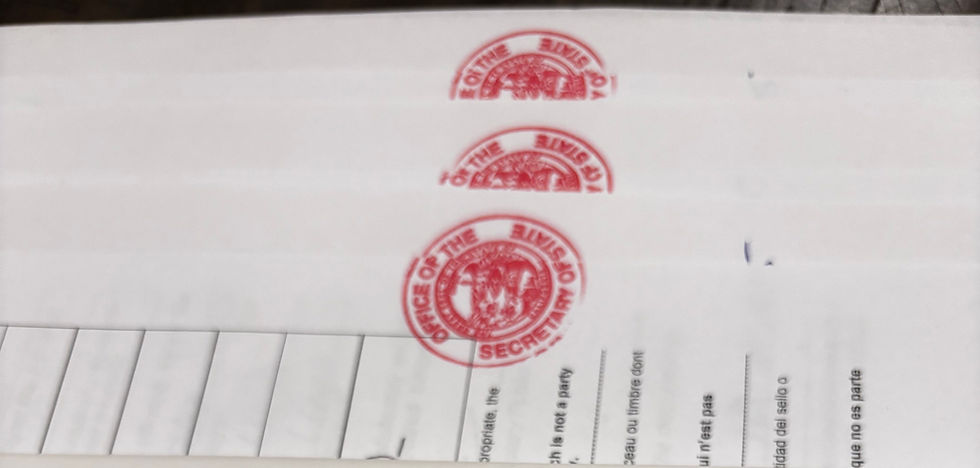
When a Secretary of State attaches an apostille to a birth certificate, marriage certificate, death certificate, or notarized document, the apostille becomes part of the official document package.
One of the biggest mistakes people make is removing the staple or separating the apostille from the document to make scanning or copying easier.
Once the apostille is detached, the receiving authority may no longer be able to confirm that the apostille belongs to that specific document. In many cases, the document will need to be apostilled again before it can be used.
2. Translating the Document Too Early
Order matters.
A common mistake is having a vital record, court document, or notarized document translated before the apostille has been completed.
For Italy, the apostille itself often needs to be translated because it contains important authentication details, including the issuing authority, date, official signature information, seal details, and apostille certificate language.
If the translation is completed before the apostille is attached, the final Italian translation may be incomplete because it does not include the apostille certificate.
This can lead to rejection, delays, and the need for a corrected translation.
3. Assuming Every Italian Office Follows the Same Rules
Italian consulates, Comuni, courts, and administrative offices may follow different internal procedures.
For example, an Italian consulate in the United States handling a dual citizenship application may accept one type of translation workflow, while a Comune in Italy may require a sworn or asseverated translation completed through a different process.
This is especially important for:
Dual citizenship applications
Marriage registration
Residency applications
Court filings
Vital record submissions
Before mailing original documents overseas or submitting them to a consulate, the document package should be reviewed against the exact checklist from the receiving office.
A strong Italy document package should match across: the original record, the attached apostille, the Italian translation, and every stamp, seal, signature, and certification page.
Because requirements can vary by Comune, consulate, and administrative office, confirming the specific destination requirements before processing is the safest way to avoid costly rejections.
Italian Translation Requirements for Apostille Documents: FAQs
Do apostilled documents for Italy need to be translated?
In many cases, yes. If a document will be submitted to an Italian Comune, consulate, court, university, or government office, the receiving authority may require an Italian translation in addition to the apostille.
Should I translate my document before or after the apostille?
The apostille should usually be completed first. In Italy, the apostille is often treated as part of the legal document, which means the apostille certificate itself may also need to be translated into Italian.
What is a traduzione giurata?
A traduzione giurata is a sworn or asseverated translation used in Italy. A qualified translator swears before an Italian court or authorized office that the translation is faithful to the original document.
What is a Certificato di Conformità della Traduzione?
A Certificato di Conformità della Traduzione is a certificate of translation conformity issued by an Italian consulate when the consulate reviews and certifies that a translation meets its requirements.
What is the double apostille method for Italy?
The double apostille method generally means the original document receives an apostille first, then the translation certification is separately notarized and apostilled. This creates an authentication chain for both the original document and the translation package.
Can a sworn translator in Italy handle the translation after the California apostille is completed?
Yes. In many Italy-related workflows, the original California document is apostilled first, then the full apostilled document package is translated by a sworn translator familiar with Italian administrative requirements.
Why does the second apostille need to be from the same state as the Remote Online Notary?
The second apostille authenticates the notary public who witnessed the translator's signature during the remote online notarization session. Because apostilles are issued by the state connected to that notary's commission, the second apostille must come from the same state as the Remote Online Notary.
Do all Italian Comuni accept the same translation process?
No. Italian Comuni and consular offices may have different requirements. One office may accept a certified translation package, while another may require a sworn translation, consular certification, or an apostilled translator affidavit.
Does Italy require embassy legalization for California apostilled documents?
Italy is part of the Hague Apostille Convention, so properly apostilled California documents are generally recognized in Italy without embassy legalization. Translation requirements are separate from apostille authentication requirements.
What is the most common mistake with Italian apostille translations?
One of the most common mistakes is translating the document before the apostille is attached. If the apostille is added later, the translation may not match the final authenticated document package.
Need Help Preparing Apostille Documents for Italy?
If your documents will be used in Italy for dual citizenship, marriage registration, residency, inheritance matters, probate, education, international business, or legal filings, proper preparation before submission can help prevent costly delays and document rejection.
I assist clients throughout San Mateo County, Santa Clara County, and the greater Bay Area with:
Federal authentication guidance
Italy document preparation support
Sworn translation workflow guidance for Italian use
Common Italy document requests include:
Because Italian Comuni, courts, and consular offices may follow different administrative procedures, confirming the correct apostille and translation workflow before shipping original documents internationally can help avoid unnecessary delays, rejected filings, and repeat processing expenses.

Call or text Tifini Vega, Mobile Notary & Apostille Specialist, at 650-675-7760 to discuss your Italy document requirements.


Thank you for this informative post on getting an apostille for Italy. It provides crucial guidance for navigating international legal documentation. For professionals in Rome involved in cross-border operations, the premier strategic governance course & workshop for managers in Rome, Italy provides a strong foundation for understanding and implementing effective governance structures.
Getting an apostille for Italy requires careful attention to documentation, legal verification, and compliance with international authentication procedures. Ensuring that documents are properly prepared can help avoid delays and complications in business, education, or legal processes. These regulatory and compliance-focused concepts are also relevant to the strategic governance seminar & course for executives in Rome, Italy, where professionals explore organizational oversight, policy frameworks, and effective administrative governance.