
Understanding Apostilles: Your Essential Guide
- Dec 22, 2025
- 2 min read
Updated: Apr 8
What Is an Apostille?
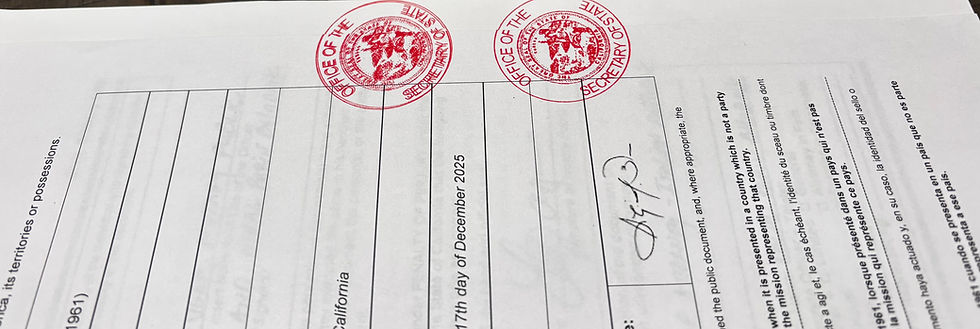
An apostille is a certificate that authenticates the signature of a public official on a document so it can be used in another country. It confirms the authenticity of the signature, the official’s authority, and, when applicable, the seal or stamp on the document, such as a notary public seal.
Apostilles are issued only by designated government authorities, such as the California Secretary of State.
View my California apostille services for a complete overview

Who Issues Apostilles in California?
Only the California Secretary of State can issue an apostille for documents that are issued or notarized in California.
Notaries public cannot issue apostilles, but they often notarize documents before they are submitted for apostille processing.
Apostille vs Notary: What’s the Difference?
A notary public:
Verifies identity
Confirms willingness to sign
Witnesses the signature
An apostille:
Authenticates the notary or issuing authority
Allows the document to be legally recognized in another country
Can a Notary Provide an Apostille?
No. A notary cannot issue an apostille. Apostilles are issued only by government authorities such as a Secretary of State or the U.S. Department of State.
What Documents Can Be Apostilled?
Common documents include:
Birth, marriage, and death certificates
Diplomas and transcripts
Court documents
How Much Does an Apostille Cost?
Costs vary depending on:
State fees
Notarization (if required)
Shipping or courier services
Processing speed (standard vs expedited)
In California, the state fee is typically around $20–$26 per document, with additional service fees depending on turnaround time.
How Long Does It Take?
Processing times vary:
Mail-in: can take several weeks
In-person: same day or a few business days
Facilitated service: faster depending on urgency
Where Do You Get an Apostille?
State-issued documents → California Secretary of State
Federal documents → U.S. Department of State
Can an Apostille Be Rejected?
Yes. Common reasons include:
Incorrect notarization
Missing required wording
Submitting to the wrong authority
Using outdated documents
To avoid delays, review the most common apostille mistakes that cause rejections
How Long Is an Apostille Valid?
Apostilles do not expire. However, some countries require recently issued documents.
Hague countries: Apostille required
Non-Hague countries: Authentication and embassy legalization required
How to Get an Apostille (Step-by-Step)
Prepare your document
Notarize if required
Submit to the appropriate authority
Receive your apostille
Common Misconceptions
Apostilles do not verify document content
Notarization and apostille are not the same
Not all documents should be notarized before apostille
Need Help with Apostille Services?
If you’re not sure what your document requires, I can review it before submission and help you avoid delays.
View my California apostille services or get started
Call or text: (650) 675-7760


Comments