
How to Apostille a Power of Attorney in California
Updated: Sep 24
What Is a Power of Attorney Apostille?
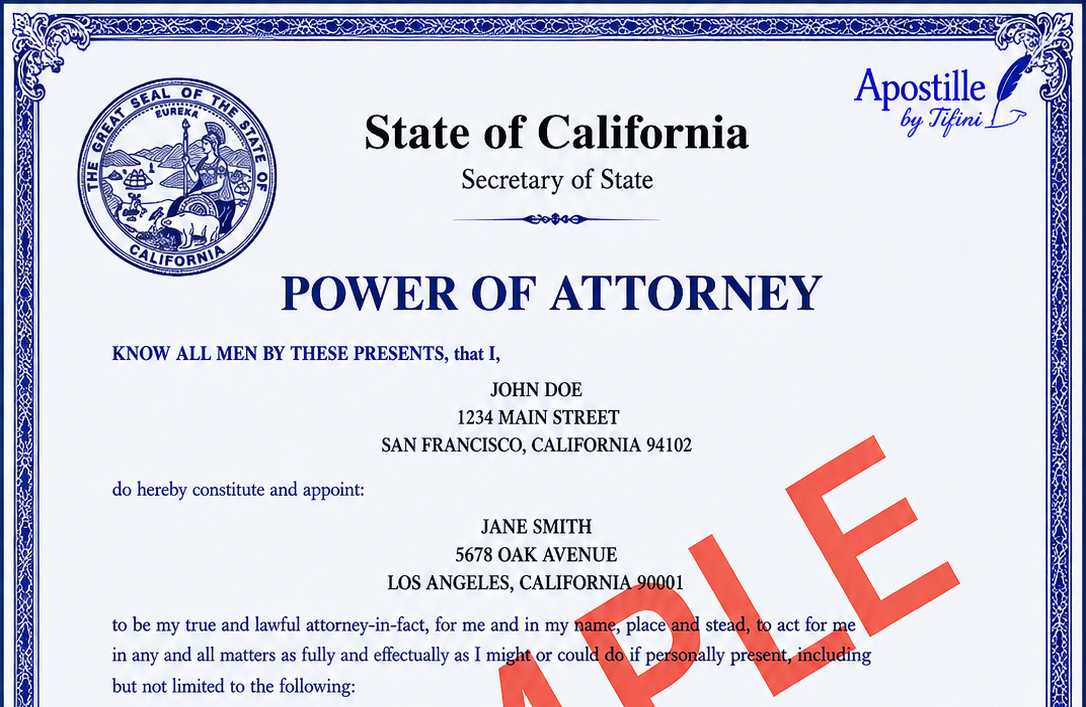
If you need to use a Power of Attorney in another country, the document may require notarization and a California apostille before it can be accepted internationally.
A Power of Attorney apostille is commonly requested for:
Overseas real estate transactions
Inheritance and probate matters
International banking authorizations
Family legal matters abroad
Foreign business transactions
Healthcare and financial authorizations
Many countries require a Special Power of Attorney (SPA) rather than a General Power of Attorney. A Special Power of Attorney authorizes another person to act on your behalf for a specific legal matter or transaction, such as selling property, managing an inheritance, or completing a banking transaction overseas.
Before signing, it's important to confirm exactly what the receiving authority requires. Depending on the destination country, the document may need an apostille, authentication and embassy legalization, certified translation, or specific document wording.
Preparing the document correctly from the beginning can help avoid delays, rejected documents, and unnecessary international shipping.
For current turnaround times and fees, see my California Apostille Pricing page.
When a Power of Attorney Needs an Apostille
A Power of Attorney intended for use in another country often requires an apostille before it can be accepted by a foreign government, court, bank, land registry, or other receiving authority.
Common situations include:
Overseas real estate transactions
Inheritance and probate matters
International banking authorizations
Foreign business transactions
Immigration or residency applications
Family legal matters abroad
While the apostille certificate follows a standardized format under the Hague Apostille Convention, the receiving country's document requirements may vary. Some countries accept a properly notarized General Power of Attorney, while others require a Special Power of Attorney, certified translation, witness signatures, or additional supporting documents.
Understanding those requirements before signing can help prevent delays and rejected documents.
Types of Power of Attorney Documents That Commonly Require an Apostille
General Power of Attorney
Special Power of Attorney
Real Estate Power of Attorney
Medical Power of Attorney
Durable Power of Attorney
Corporate Power of Attorney
Minor Child Travel Authorization
Countries That Commonly Require a Power of Attorney Apostille
How the Apostille Process Works for a Power of Attorney
In California, a Power of Attorney intended for international use is typically signed before a California notary public before it can be submitted for apostille processing.
Once the notarization is complete, the document can be submitted to the appropriate authority for apostille processing.
Additional preparation may also be required if the document package includes:
Supporting legal documents
Multiple signers
Special Power of Attorney instructions
Requirements from a foreign attorney, court, or government agency
Preparing each document in the proper order can help avoid unnecessary delays.
California Notary Requirements for a Power of Attorney
When a Power of Attorney requires notarization before apostille processing, California notary laws still apply.
Important requirements include:
California notaries cannot choose the notarial act for the signer.
The signer must personally appear before the notary.
The document must be complete before notarization.
Acceptable identification is required.
The notarization must be completed before the document can be submitted for apostille processing.
An apostille verifies the authenticity of the notary public's signature—it does not validate the contents of the document.
Because the apostille is based on the completed notarization, it's important that the notarization is performed correctly before the document is submitted to the California Secretary of State.
Even if you're working with an international deadline, California notary requirements cannot be waived.
Common Reasons a Power of Attorney Is Rejected
Many apostille delays are preventable. In many cases, the issue isn't the California Secretary of State—it's that the document wasn't prepared correctly before submission.
Common reasons a Power of Attorney is rejected include:
Incorrect or incomplete notarization
Using the wrong type of Power of Attorney
A document format that doesn't meet the receiving country's requirements
Name differences between the Power of Attorney and supporting identification or records
Requesting a California apostille when the destination country requires authentication and embassy or consulate legalization
Missing certified translations or other required supporting documents
Some foreign attorneys, consulates, banks, and government agencies provide their own Power of Attorney templates. While those templates may be appropriate for use overseas, the document must still comply with California notary law before it can be notarized and submitted for apostille processing.
Preparing the document correctly before notarization and apostille processing helps improve the likelihood that it will be accepted by the receiving authority.
What to Check Before Signing a Power of Attorney
Before scheduling notarization, confirm who will receive the Power of Attorney and what that receiving authority requires.
Depending on the destination country, the document may require:
A California apostille
Authentication and embassy or consulate legalization
Certified translation
Witness signatures
Special Power of Attorney (SPA) wording
Country-specific formatting or supporting documents
If a foreign attorney, bank, court, consulate, or government agency has provided instructions, review them carefully before the notarization appointment.
Before signing, make sure the document is complete but unsigned, as most Powers of Attorney must be signed in the presence of the notary. Blank spaces, missing information, or incomplete sections can delay processing or require the document to be prepared again.
The signer should also have acceptable California identification available for the notarization appointment.
If you're working with an international deadline, allow time for notarization, apostille processing, certified translation (if required), shipping, and any review by the receiving authority.
Preparing the document correctly before signing is often the best way to avoid unnecessary delays later.
Does Every Country Have the Same Power of Attorney Requirements?
No. While the apostille certificate itself follows a standardized format under the Hague Apostille Convention, the requirements for the Power of Attorney can vary from one country to another—and even between different receiving authorities within the same country.
For example, one country may accept a General Power of Attorney, while another requires a Special Power of Attorney (SPA) for a specific transaction. Some foreign attorneys, banks, courts, or government agencies may also require:
Certified translation
Country-specific document wording
Witness signatures
Passport or identification references
Property descriptions or supporting documents
For that reason, it's important to confirm the receiving authority's requirements before the document is signed and notarized.
Even within the same country, a bank may have different requirements than a court, land registry, consulate, or government office.
Power of Attorney Apostille California FAQs
Does a power of attorney need to be notarized before it can receive an apostille?
Yes. In most California power of attorney apostille cases, the document must be properly signed and notarized before it can be submitted for apostille processing. The apostille confirms the authenticity of the notary public's signature and seal, not the contents of the power of attorney.
How do I apostille a power of attorney in California?
First, confirm the destination country and the requirements of the receiving party. Then the power of attorney is signed before a California notary public, and the notarized document is submitted to the California Secretary of State for apostille processing if the destination country is part of the Hague Apostille Convention.
Can I apostille a Special Power of Attorney for Mexico, Spain, Italy, or the Philippines?
Yes. Special Powers of Attorney are commonly apostilled for use in Mexico, Spain, Italy, the Philippines, and other Hague Convention countries. However, the receiving office may require specific wording, passport name matching, witness language, or certified translation, so requirements should be confirmed before signing.
What is a Special Power of Attorney?
A Special Power of Attorney (SPA) gives another person authority to handle a specific legal act or limited transaction on your behalf. Special Powers of Attorney are commonly used for overseas property sales, inheritance matters, banking transactions, immigration filings, and family legal matters abroad.
What if the destination country is not part of the Hague Apostille Convention?
If the destination country is not part of the Hague Apostille Convention, the document usually cannot receive a standard apostille. It may need authentication and possible embassy or consulate legalization instead. The correct process depends on the country where the document will be used.
Does a power of attorney need a certified translation before apostille?
Not always. Some receiving offices accept the notarized English power of attorney with an apostille, while others require a certified translation or sworn translation. Translation requirements are set by the receiving country, court, bank, attorney, or government office.
Can a California notary prepare or choose the wording for my power of attorney?
No. A California notary cannot prepare legal documents, choose legal wording, or tell you which notarial act is required. The receiving party, attorney, or document preparer should provide the required power of attorney language and notarial instructions.
How long does a power of attorney apostille take in California?
Processing time depends on the service option, document readiness, and submission method. Standard apostille service commonly takes several business days, while expedited handling may be available when the notarized document is complete and ready for submission.
What identification is needed to notarize a power of attorney in California?
The signer must present acceptable identification under California notary law, such as a current government-issued ID or another form of ID allowed by California rules. If the ID is expired, missing, or does not match the document closely enough, the signing may be delayed.
Why Mobile Notarization Can Help
For many people, the challenge isn't understanding the apostille process—it's getting the Power of Attorney signed and notarized correctly before it can be submitted.
A California Power of Attorney generally must be properly notarized before it is eligible for apostille processing. If the notarization is incomplete or doesn't comply with California law, the document may be delayed or rejected before an apostille can be issued.
Mobile notarization allows the signing to take place at your home, office, or another convenient location, making it easier to complete the notarization and move directly into the apostille process without unnecessary delays.
Whether your Power of Attorney is being used for an international real estate transaction, overseas banking, inheritance matters, family legal affairs, or business purposes, preparing the document correctly before submission can help avoid preventable processing delays.
If your Power of Attorney has not yet been notarized, I can provide mobile notarization before coordinating California apostille processing, helping ensure your document is ready for submission to the California Secretary of State.
The Importance of Getting the Process Right
When a Power of Attorney will be used in another country, preparing the document correctly before submission is one of the most important steps.
Many delays occur because the document wasn't notarized properly, the wrong version of the document was submitted, or the destination country required authentication instead of an apostille.
Before the document is signed, it's a good idea to confirm the receiving country's requirements. Once the Power of Attorney has been properly notarized, the next step is determining whether it requires a California apostille or, for non-Hague countries, authentication and embassy or consulate legalization.
Taking a few extra minutes to verify the requirements before submission can help avoid unnecessary delays, repeat notarizations, additional international shipping, and rejected documents.
When international real estate transactions, inheritance matters, business filings, or family legal issues are involved, getting the process right the first time can save both time and expense.
Need Help With a Power of Attorney Apostille in California?
I provide mobile notarization (when required) and California apostille services for Powers of Attorney being used internationally.
I regularly assist with:
General Powers of Attorney
Special Powers of Attorney (SPA)
Real estate Powers of Attorney
International banking authorization documents
Inheritance and probate-related Powers of Attorney
Overseas property authorization documents
If your Power of Attorney will be used in another country, confirming the notarization and apostille requirements before signing can help prevent unnecessary delays, rejected documents, and repeat appointments.
Mobile appointments are available throughout San Mateo County, Santa Clara County, Palo Alto, Mountain View, San Jose, Redwood City, Burlingame, Daly City and surrounding Bay Area communities.
Tifini Goebel - California Notary & Apostille Services
Call or text: (650) 675-7760

Comments