top of page
california-mobile-notary-public-apostille-and-translation-services

Because the Details Matter

Call or Text     (650) 675-7760

How to Apostille Birth Certificate Fast

  • Apr 11
  • 6 min read

Updated: 3 days ago

If a foreign consulate, school, court, or civil registry asked for an apostille, the part that usually slows people down is not the apostille itself. It is getting the right birth certificate in the right form before it ever reaches the state. That is why understanding how to apostille birth certificate records correctly matters - one wrong version, one missing certification, or one country-specific mismatch can mean a rejection and a lost week.

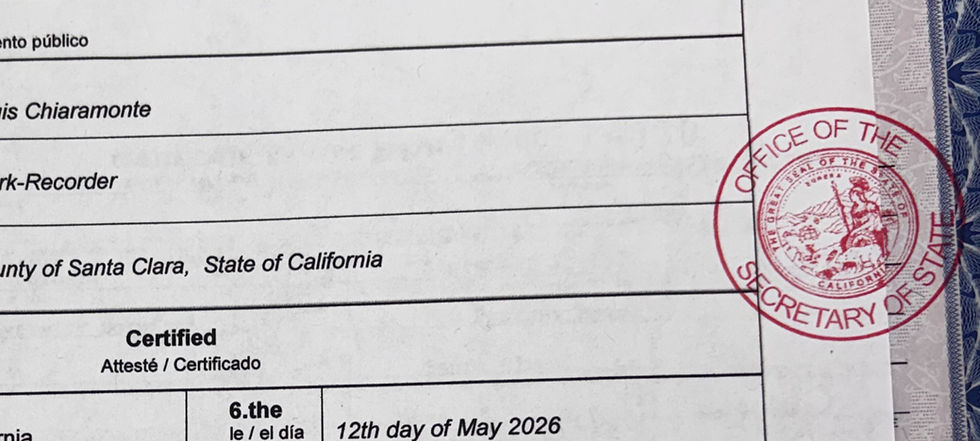
california apostille stamp on a birth certificate
California apostille stamp on a certified copy birth certificate

How to apostille birth certificate records the right way

The first rule is simple. You generally cannot apostille just any copy of a birth certificate. In most cases, the state will only apostille a certified copy issued by the proper vital records authority. A hospital souvenir certificate, photocopy, scanned copy, or laminated record is usually not acceptable.

For a birth certificate issued in the United States, the apostille normally comes from the Secretary of State in the same state where the birth certificate was issued. If the birth took place in California, California handles the apostille. If the birth took place in Texas, then Texas handles it. This is where many people lose time - they live in one state now, but the document was issued in another, and the apostille must follow the issuing state’s rules.

You also need to confirm that the receiving country is part of the Hague Apostille Convention. If it is, you usually need an apostille. If it is not, you may need authentication and legalization instead, which can involve additional steps. The document may be the same, but the workflow is not.

Start with the certified copy, not the apostille request

Before you prepare anything for the Secretary of State, look closely at the birth certificate itself. It should be a certified copy issued by the county clerk, county recorder, or state vital records office, depending on that state’s system. The certification on the document must be original and intact.

This is also where timing matters. Some countries, consulates, and overseas agencies prefer recently issued vital records, even when the state would technically apostille an older certified copy. If the birth certificate is many years old, worn, hard to read, or has a certification that looks faded, ordering a fresh certified copy is often the safer move.

There is a trade-off here. Using the certified copy already in your file may save money and a few days. Ordering a new one may reduce the chance of rejection. For high-stakes deadlines like citizenship applications, marriage abroad, or school enrollment, the cleaner option is often worth it.

The basic process for how to apostille birth certificate documents

In most cases, the process looks like this.

First, obtain a certified copy from the proper records office if you do not already have one that meets current requirements. Second, verify whether the destination country needs an apostille or a different form of authentication. Third, submit the certified birth certificate to the correct Secretary of State or authorized state office. Fourth, if the receiving authority requires translation, arrange that separately after confirming whether the apostille must attach to the English-language original first.

That sounds straightforward, but the details depend on where the certificate was issued and where it is going. Some states accept mailed requests, some offer in-person processing options, and some have very particular cover sheet or payment requirements. A small submission error can delay the entire package.

Common mistakes that cause birth certificate apostille rejections

The biggest mistake is sending the wrong document. People often mail in a plain copy, an abstract record, or a hospital-issued birth record that looks official but is not the version the state can apostille.

The second common problem is sending the birth certificate to the wrong state office. The apostille does not come from the state where you live now unless that is also where the birth certificate was issued.

The third issue is country mismatch. Many people use the word apostille for every international document request, but some countries are not Hague Convention members. In that case, an apostille may not satisfy the receiving authority at all.

The fourth problem is skipping instructions from the end user. A foreign court, passport office, or university may ask for a long-form certificate, a recent issue date, or a translation by a qualified provider. The apostille alone does not override those document-specific requirements.

Finally, some people assume notarization is part of the process for a birth certificate. Usually it is not. Birth certificates are vital records, and the key requirement is the certified copy issued by the proper government authority. Notarizing a photocopy of a birth certificate usually does not solve the problem.

Do you need a certified translation too?

Sometimes yes, sometimes no. If the receiving country or foreign institution does not operate in English, they may require a certified translation of the birth certificate. But the order of operations matters.

In many cases, the apostille is issued for the original certified birth certificate in English, and the translation is prepared as a companion document for submission abroad. In other situations, the translation itself may need notarization or additional certification. This depends on the destination country and the receiving agency.

That is why it helps to check the final document checklist before spending money on translation. If you are submitting documents for dual citizenship, marriage abroad, or residency, the foreign authority may have rules that go beyond the apostille itself.

How long does it take?

Processing time depends on the issuing state, the submission method, and whether you need to order the certified copy first. The apostille step may be relatively quick, but obtaining the correct birth certificate can add time if you do not already have it.

Mail requests usually take longer than in-person or courier-supported submissions. Peak travel seasons, staffing backlogs, and state-specific processing changes can also affect turnaround. If you have a hard deadline, work backward from the date the document must arrive overseas, not just the date you want to send it out.

For urgent cases, execution matters more than speed claims. A rushed submission with the wrong record is slower than a properly checked package submitted once.

Special cases to watch for

If the birth certificate is from Puerto Rico, older records may need replacement with a newer issuance depending on current acceptance rules. If the document is damaged, laminated, or difficult to read, get a fresh certified copy. If the name on the birth certificate does not match the current passport or legal identity documents, you may also need supporting records such as a marriage certificate or court order.

Adoption-related records, amended birth certificates, and delayed registration birth records can also require extra review. They are not automatically a problem, but they may draw closer scrutiny depending on the destination authority.

When professional help makes sense

If you are handling a straightforward request with plenty of time, you may be able to complete the process yourself. But if the document is tied to an urgent immigration filing, overseas wedding, international school deadline, or citizenship matter, professional handling can reduce the risk of a preventable rejection.

This is especially true when multiple documents are involved. Birth certificates are often submitted alongside marriage certificates, FBI background checks, powers of attorney, or translated civil records. Once the package includes different issuing authorities and different destination-country rules, the process gets less forgiving.

For Bay Area families and professionals working against travel or consular deadlines, a service that understands apostille workflows can help confirm whether the birth certificate is acceptable before it is submitted. That front-end review is often where time is saved.

A practical checklist before you submit

Make sure the birth certificate is a certified copy issued by the proper authority. Confirm the destination country’s apostille or authentication requirement. Check whether the receiving agency wants a long-form certificate or a recently issued copy. Verify whether translation is required and when it should be completed. Review state submission instructions carefully, including fees, forms, and return shipping details.

Those steps are not complicated, but each one affects whether the apostille will be accepted where you are sending it.

If you are trying to figure out how to apostille birth certificate documents without delays, the safest approach is to slow down at the document review stage. A clean certified copy, the correct state office, and clear destination-country instructions usually make the difference between a smooth submission and a frustrating reset. When the document is tied to something time-sensitive, getting it right the first time is usually the fastest path forward.


Need Help with a Vital Record Apostille?

I assist with:

  • Reviewing your document to confirm it’s apostille-ready

  • Helping you obtain the correct certified copy

  • Coordinating submission to the California Secretary of State

  • Secure return delivery


If you're unsure which process applies to your documents, I provide apostille services in Sunnyvale and can review your paperwork before submission.


Need Help with Apostille Processing?

If you're unsure whether your documents are prepared correctly, I can review them before submission to help avoid delays or rejection.

Call or text: (650) 675-7760


Comments


bottom of page