
Apostille for Italy: What to Get Right Before You Submit
Updated: 2 days ago
If your Italian consulate, comune, university, employer, or attorney asked for an apostille, the real issue is usually not the apostille itself. The real issue is getting the right version of the document, from the right office, in the right order, before anything is submitted.
Italy accepts apostilles under the Hague Apostille Convention, which makes the legalization process easier for many U.S. documents. But easier does not mean automatic.
Whether your paperwork is accepted often depends on the document type, where it was issued or notarized, whether it is state or federal, and whether the receiving office in Italy also requires certified or sworn translation.
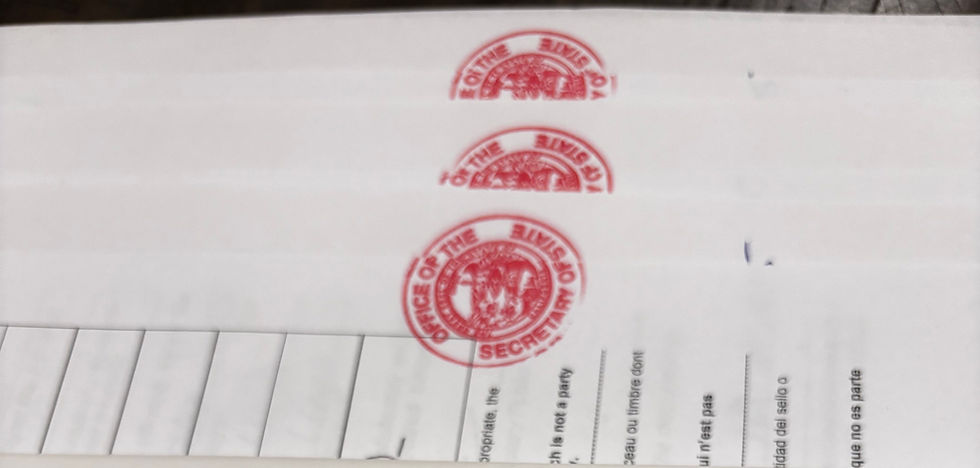
When an Apostille for Italy Is Required
An apostille is used to authenticate the signature, seal, or official capacity on a public document so it can be recognized in another Hague Convention country.
For Italy, apostilles are commonly requested for documents related to:
employment or residency
probate and inheritance matters
Common documents include birth certificates, marriage certificates, death certificates, divorce decrees, FBI background checks, diplomas, transcripts, corporate records, affidavits, and powers of attorney.
The first thing to understand is that not every document can be apostilled in the form you currently have. A scanned copy, hospital souvenir birth record, unofficial school printout, or old photocopy usually will not work.
The Biggest Mistake: Using the Wrong Document Version
Most apostille delays happen before the document is even submitted.
People often assume that any document that looks official is ready. Italy-facing documents are usually less forgiving than that.
For vital records, you usually need a certified copy issued by the correct government office. For example, a California birth certificate for Italy should typically be issued by the county recorder or state vital records office.
If the document is too old, damaged, improperly certified, or signed by an official whose signature cannot be verified for apostille purposes, it will be rejected.
For notarized documents, the notarization must be complete and California-compliant before apostille processing begins. That means the venue, notarial wording, signer name, signature, date, seal, and certificate must all be correct.
A bad notarization cannot be fixed by an apostille. The apostille only authenticates the public official’s signature already on the document.
How the Apostille Process Works for U.S. Documents Going to Italy
The process depends on the type of document.
State-Issued and State-Notarized Documents
If your document was issued by a state agency or notarized by a state-commissioned notary public, the apostille comes from that state’s Secretary of State apostille office.
For example, a California notarized power of attorney for Italy would go through the California apostille process.
A California birth certificate, marriage certificate, death certificate, or notarized affidavit would also follow the California apostille path.
This is where execution matters. If a signer is in a hospital, skilled nursing facility, office, or under time pressure before international travel, the notarization still has to meet California requirements.
Rushing the signing and missing an ID issue, signature issue, or notarial wording issue can create a larger delay later.
Federal Documents
Federal documents follow a different route.
FBI background checks are a common example for Italy-related applications, including citizenship, residency, visa, and employment matters.
An FBI background check is not apostilled by the California Secretary of State. It must go through the federal authentication process.
That distinction matters because sending a federal document to a state apostille office, or sending a state document to the wrong federal process, wastes valuable time.
Apostille for Italian Citizenship by Descent Documents
Italian citizenship by descent files often involve multiple generations of documents. These may include birth certificates, marriage certificates, death certificates, divorce decrees, name change records, naturalization records, and supporting affidavits.
This is one of the most document-heavy Italy apostille requests.
The challenge is not just getting apostilles. The challenge is making sure the records are consistent, complete, and acceptable to the Italian consulate or comune.
Names, dates, spellings, and locations often need to match across records. If one certificate contains an error, apostilling it does not correct the problem. The apostille authenticates the signature or seal. It does not validate the accuracy of the document’s content.
For Italian citizenship, translation planning is also important. Many documents may need Italian translation, and the receiving office may have specific requirements for how those translations must be completed.
Do Italy Documents Need Certified or Sworn Translation?
Often, yes.
The apostille does not replace translation requirements.
Many Italian authorities want the U.S. document translated into Italian. Some also expect the apostille itself to be translated. What they accept can vary depending on the receiving office.
An Italian consulate may have one requirement. A comune in Italy may have another. A university, employer, court, or attorney may ask for a different format.
Some clients only need an apostilled document. Others need an apostilled document plus certified translation. In certain cases, the translation may need to be sworn, notarized, or separately apostilled depending on where it will be presented.
Before ordering the apostille or translation, confirm exactly what the receiving office in Italy wants.
Apostille for Italy by Use Case
Italian Citizenship and Ancestry Applications
Italian citizenship files often include birth, marriage, death, divorce, and name-related documents across multiple generations.
The biggest issues are document version, consistency, and translation. If names or dates do not align, the apostille will not solve that mismatch.
Marriage-related documents may include birth certificates, divorce decrees, affidavits, powers of attorney, and other supporting records.
Timing matters. Some supporting documents may have practical shelf lives, even when they do not technically expire. If your ceremony date is close, start early.
School, University, and Work Documents
Diplomas, transcripts, enrollment letters, FBI background checks, and professional records may require notarization, apostille, and Italian translation.
Universities and employers often use their own checklists, so the apostille may be only one part of the full requirement.
Business Documents for Italy
Business documents may include certificates of good standing, articles of incorporation, bylaws, board resolutions, powers of attorney, and corporate authorization letters.
These documents may be needed for banking, tax, expansion, contracts, or legal representation in Italy.
With corporate documents, speed and accuracy both matter. One missing certification can delay a filing, transaction, or appointment.
Powers of Attorney for Italy
A power of attorney for Italy often needs notarization before apostille processing. The document may be used for real estate, inheritance, legal representation, banking, or family matters.
For California signers, the notarial certificate must be compliant before the document can be submitted for a California apostille.
What Bay Area clients should watch for
For clients in the Bay Area, especially those juggling work, caregiving, or travel plans, convenience matters - but compliance matters more. Mobile notarization can save time for powers of attorney, affidavits, and business documents, especially when signers cannot easily leave home, the office, or a care facility. But the signer still needs acceptable ID, willingness, and awareness.
How to Avoid Apostille Delays and Rejections
Before submitting documents for Italy, verify four things:
What the receiving office in Italy requires
Whether your document is the correct original or certified copy
Whether notarization is required and fully compliant
Whether certified or sworn Italian translation is also needed
You should also watch for hidden timing issues. Some agencies in Italy prefer recently issued vital records. Some universities and employers want background checks issued within a certain number of months.
Shipping time, correction requests, translation time, and signature verification delays can all affect your timeline.
If your case involves multiple documents, do not assume they all follow the same path. A California birth certificate, a notarized affidavit, and an FBI background check may each require different handling even though all three are going to Italy.
Apostille for Italy FAQs
Common questions about apostilles, translations, citizenship documents, and U.S. records being used in Italy.
Does Italy accept apostilles?
Yes. Italy participates in the Hague Apostille Convention, so eligible U.S. public documents can generally be authenticated with an apostille for use there. The underlying document must still meet the receiving authority’s requirements.
Do U.S. documents need translation for Italy?
Often, yes. Many Italian authorities require an Italian translation. Some also require the apostille itself to be translated. Confirm the exact requirements with the office receiving your documents.
Can documents for Italian citizenship by descent be apostilled?
Yes. Birth, marriage, death, and divorce records, along with other supporting documents, may need apostilles. The receiving authority may also have requirements for translations and consistency across names and records.
Does Italy require sworn translations?
Some receiving offices require a sworn translation; others accept a different type of translation or certification. Requirements vary by consulate, comune, court, university, and document purpose.
Can an FBI background check be apostilled for Italy?
Yes. An eligible FBI background check follows the federal apostille process through the U.S. Department of State. A state apostille office, including the California Secretary of State, does not apostille the FBI report.
Can California documents be apostilled for Italy?
Yes. Eligible California-issued records and properly California-notarized documents can generally be submitted to the California Secretary of State for an apostille.
What documents are commonly apostilled for Italy?
Common examples include certified vital records, divorce judgments, FBI background checks, school records, powers of attorney, affidavits, and business documents. The issuing authority determines whether the apostille comes from a state or federal office.
Can a power of attorney be apostilled for Italy?
Yes, if it has been properly prepared and notarized. The document preparer or receiving authority should specify the required notarial act and any particular form requirements before the signing.
How long does an apostille for Italy take?
Timing depends on whether the document is ready to submit, whether a certified copy or notarization is needed, and whether it follows a state or federal process. Translation and shipping can add time.
What is the difference between an apostille and legalization for Italy?
For eligible documents exchanged under the Hague Apostille Convention, an apostille generally replaces embassy or consular legalization. Translation and other requirements from the receiving Italian office may still apply.
Need help with an eligible California document? See my apostille services for Italy for document review and processing options.
When Professional Apostille Help Makes Sense
If you have one simple document and plenty of time, handling it yourself may be reasonable.
If you have a consulate deadline, citizenship file, wedding date, school deadline, business transaction, translation requirement, or signer who needs a mobile appointment, professional help can reduce the risk of rework.
The value is not just couriering paperwork. It is catching problems early, such as the wrong document version, incomplete notarization, missing translation planning, or confusion between state and federal authentication.
Apostille work for Italy is manageable when the sequence is right.
Get the right document first. Confirm whether translation is needed. Make sure the notarization and apostille path match the document type.
That kind of preparation saves more time than rushing ever does.
Mobile Notary and Apostille Services in California
I provide mobile notarization and California apostille facilitation services throughout San Mateo County, Santa Clara County, Palo Alto, Mountain View, Redwood City, Burlingame, San Jose, and surrounding Bay Area communities.
I help clients coordinate:
notarization
apostille processing
document review
certified translation coordination
international document preparation for international document use.
Call or text (650) 675-7760 to request a quote for apostille services.

Comments